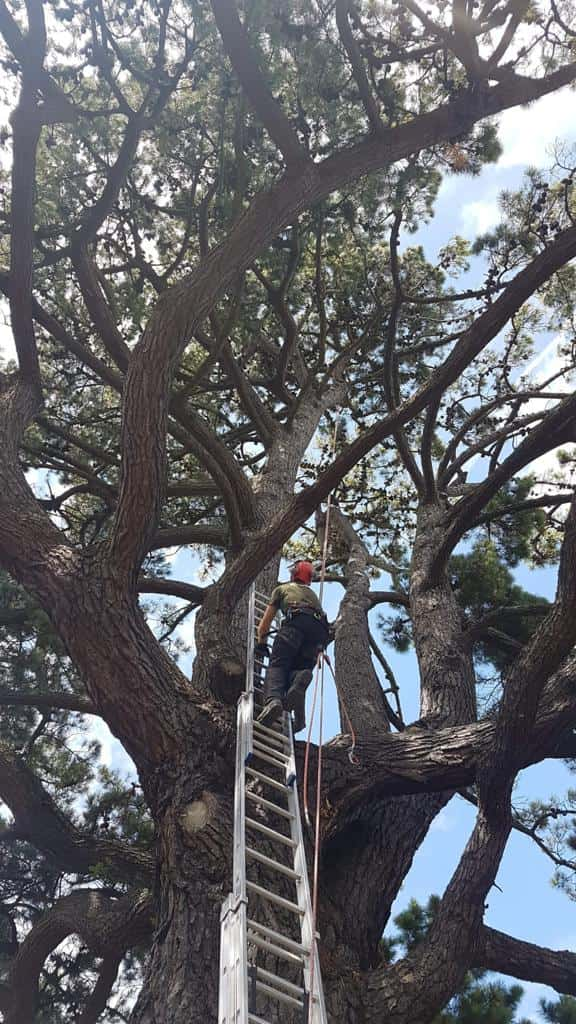
A tree may become a concern because it has damaged branches, excessive growth, an unbalanced crown or visible deterioration. These signs do not automatically mean that removal is necessary. In many cases, careful remedial work or crown reduction can manage the problem while retaining the tree.
The correct decision depends on the tree’s condition, structure, species, position and likely response to treatment. For property owners in Waltham Abbey, Essex, a professional tree assessment can distinguish between a manageable defect and a problem that makes removal the more appropriate option.
How to Choose the Right Solution for a Problem Tree
Tree work should address the cause of the concern rather than simply changing the tree’s appearance. An assessment should examine the roots, trunk, principal branch unions and crown before recommending repair, reduction or removal.
When Can a Tree Be Repaired?
Trees do not repair themselves in the same way as buildings. They respond to damage by forming new growth around affected tissue and limiting the spread of decay. In practical terms, tree repair usually means remedial work that removes defective material and improves the remaining structure.
This may be suitable when the problem is confined to one part of an otherwise healthy tree. Possible work can include:
- removing dead or broken branches
- pruning branches that cross and rub
- correcting poorly distributed growth
- reducing weight from a damaged limb
- removing weak shoots
- improving clearance around garden features
- carrying out formative pruning on a younger tree
The aim is to retain a stable framework while avoiding unnecessary removal of healthy growth.
When Is Crown Reduction Appropriate?
Crown reduction decreases the height, spread or overall volume of a tree’s canopy. Selected branches are shortened to suitable growth points so that the crown remains balanced and retains a natural outline.
Reduction may be appropriate when:
- the canopy has become too large for its setting
- one side of the crown is noticeably heavier
- long branches extend beyond the available space
- selected limbs require weight reduction
- the tree is dominating a smaller garden
- the crown needs to be managed without removing the tree
The amount removed should be proportionate to the species, age and condition of the tree. Excessive cutting can cause stress, spoil the natural form and stimulate dense regrowth.
When Is Removal the More Suitable Option?
Tree removal is generally considered when repair or reduction cannot provide a sufficiently dependable outcome. This may be the case if deterioration affects the main structure rather than a limited branch or section of the crown.
Factors that may support removal include:
- extensive decay within the trunk or principal unions
- severe root damage affecting stability
- major splitting through the main structure
- significant decline throughout the crown
- repeated large branch failures
- an unsuitable lean combined with structural weakness
- a dead tree with no realistic prospect of recovery
- a tree that has outgrown its location beyond practical management
No single visible symptom should be considered in isolation. A hollow trunk, for example, does not automatically mean that a tree must be removed, as the remaining sound wood and overall structure are also important.
The Tree’s Location Affects the Decision
The same defect can present different levels of concern depending on where the tree stands. A damaged branch above an unused section of garden may require a different response from one extending over a regularly used path or seating area.
Nearby buildings, fences, planting and access routes also influence which work is practical. A professional assessment considers both the tree and the surroundings in which it is growing.
Tree Health and Structural Condition Are Different
A tree can produce healthy leaves while still containing a weakened branch union or substantial internal decay. Equally, sparse foliage does not always confirm severe structural instability.
This is why appearance alone can be misleading. The assessment should consider vitality and structure separately before deciding whether pruning can manage the problem.
Why Severe Cutting Is Not a Substitute for Removal
When a tree appears too large or difficult to manage, it can be tempting to remove most of the crown. Severe cutting does not necessarily make a structurally compromised tree dependable and may create further problems through large wounds and vigorous regrowth.
If a tree cannot be retained through proportionate pruning, removal may be more appropriate than repeatedly carrying out excessive reductions. The objective should be a sustainable result rather than a short-term change in size.
Can Ongoing Management Retain the Tree?
Some trees can be retained through planned inspections and periodic pruning. This may involve monitoring a known defect, removing dead wood or controlling regrowth at suitable intervals.
Ongoing management is only worthwhile when it has a clear purpose and the tree remains suitable for retention. Repeated work should not be used to postpone removal where the underlying condition continues to deteriorate.
What Should a Professional Assessment Examine?
A thorough tree assessment should consider:
- species, age and growth characteristics
- overall vitality
- dead, damaged or declining branches
- trunk condition and visible cavities
- principal branch unions
- root-zone changes and visible root damage
- crown balance and branch loading
- the tree’s position within the garden
- previous pruning and its effects
- the likely response to proposed work
These findings help determine whether remedial pruning, crown reduction, monitoring or removal is the most appropriate course of action.
Conclusion
A problem tree may be suitable for remedial pruning when damage is localised and the remaining structure is sound. Crown reduction can help manage excessive or unbalanced growth, while removal may be necessary when serious deterioration affects the tree’s overall stability or long-term suitability.
The right option can only be established by assessing the complete tree and its surroundings. If you are concerned about a tree in Waltham Abbey, Essex, Waltham Abbey Tree Surgeons can inspect its condition and recommend a proportionate solution. Contact the team to arrange a professional assessment.
Call us on: 01992 929 594
Click here to find out more about Waltham Abbey Tree Surgeons
Click here to complete our contact form and see how we can help with your tree care needs.